This week, we finally managed to install our new (not new ) item of furniture - a mid-18th Century grandfather clock. It's not bright and shiny like more modern ones, but a dark oak with a warm patina which the beeswax polish is drawing out. In order to set it up, we had to do a certain amount of research - how to hang the pendulum, where the weight went on the endless chain - and it got me thinking... where and when did certain divisions of time come from? The time periods which I have written either had household clocks or didn't, I have not written novels from the time of their invention. Clocks have been around for a long time, and the obsession with measuring time in an ordered fashion dates back to at least the ancient Sumerians. It was they who established a circular reading of time and, I imagine, the sixty seconds/minutes came about as much because it was an easy way to divide a circle as anything else. But it wasn't until much later that the precision of seconds ...
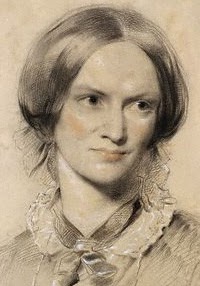 |
| Charlotte Bronte - author of "Jane Eyre" |
On this day in 1816, Charlotte Bronte was born – author of
Jane Eyre and older sister of Emily and Anne Bronte who were also writers. It’s
quite poignant to stop and think of these events that happened so long ago, but
in a family of strong-willed individuals, it isn’t long before there is a
debate opportunity:

Which has the better ending?
Jane Eyre or Wuthering Heights

Jane Eyre by Charlotte Bronte has an almost fairytale like
ending. Everything is resolved for the better – there is love and a convenient
change in circumstances too! I don’t want to give away any spoilers, but no one
can say that Jane Eyre does not have a satisfactory ending. Yes, there’s a tiny
hint of darkness in the fairytale ending (no details on this), but there are generally smiles all round.
Wuthering Heights by Emily Bronte is quite a dark novel
which spans two generations. Whilst the first generation suffer unspeakably,
the younger characters overcome all this darkness to give the classic an
intensely satisfactory ending. For me, the darkness of the novel adds
exponentially to the hope and happiness at the end.
It may have escaped your notice that I am Camp Wuthering
Heights. I think that the hope and love at the end of the novel is truly
awe-inspiring. Having said that, it is one of my very favourite books so maybe I’m biased,
but I love a book which has the light and goodness shining through the
darkness. Sometimes (and I’m sure other readers will agree with me) a book will
reach out and talk to you, connecting with your very soul. For me, Wuthering
Heights is that book.
But don’t get me wrong – I love the story of Jane Eyre. I
find it highly entertaining, thrilling and inspiring. I have spent part of this week in love with a house that, in my mind, is Thornfield Hall. I've walked up there when I can and simply gazed in the empty windows, and listened to the birds, thrilled that there were no human sounds at all.
 |
| Thornfield Hall - or Dunalistair Estate |
Most of all, however, I love that Charlotte, Emily and Anne
Bronte were all writers (and sisters!) but had completely different styles and
opinions on what a good book should contain. I come from a family of writers
and we love writing together and reading each other’s stories – but no one
could ever say our books were the same. When I was little, I used to try and
write books in the same genre as my older sisters, but soon found that I was
meant to write for a different audience.
It’s incredibly important when writing a story to remember
to include your own style – your own voice. I’ve just had to give up on a
fantasy book I was reading (I’m very disappointed with myself) because the
author had fallen into the trap that many fantasy authors do. He was trying to
mimic The Lord of the Rings, and Game of Thrones, instead of developing his own
unique style.
When I was teaching the P7s to write stories, I reiterated
the importance of an individual’s style, and always showed how great it was to
be unique. No, you don’t want to write like J K Rowling or Philip Pullman – you
want to write like yourself!
So, while the Brontes left the world (too early) with some
of the most spectacular British literature, the biggest lesson we can learn
from them is that everyone is different. Every writer has their own style which
is unique and special in its own way.
Keep writing!!
PS: I know I’ve missed Anne out from a lot of this
discussion. I’d like to read one of her books but I don’t know much about them.
Do they have a happy ending?
PPS: Which has the happier ending?? Comment below or vote on Day's Dying Glory Twitter Poll!
PPS: Which has the happier ending?? Comment below or vote on Day's Dying Glory Twitter Poll!
Well constructed blog - absolutely agree about the individuality - but couldn't possibly say which has the most satisfactory ending - both endings could pan out (with reference to past baggage) in at least two directions - the reader will use his/her own experience and inclination to move the story forward from there.
ReplyDeleteThank you for your comment, and feedback! When I finish a good book, I always feel at a complete loss so I make up a story in my mind about the characters - baggage and all! I wonder how many people do that...?
Delete